
Did You Know? We Offer Eye Tests From As Little As R349.95 On Tuesdays!
When and how often should I have my eyes tested?
We recommend that you have a comprehensive eye exam every one to two years, depending on your age, risk factors, and whether you currently wear corrective lenses. Children need regular eye exams to detect vision problems that may interfere with learning.
When should children have their first eye examination?
According to research, approximately one in five children suffers from impaired eyesight and 20% of toddlers under the age of four have compromised vision. Early detection of any visual impairment is vital to ensure that babies and toddlers are able to experience 20/20 vision from the earliest possible age. Good vision is closely linked to the learning process and to developing coordination and motor skills. It is therefore particularly important to ensure that your child has an eye test before starting school. If you suspect any significant developmental delays according to the guidelines below, it is essential that you book a professional eye examination for your toddler or child.

Signs that you might require an eye examination
- Blurry vision at any distance
- Headaches when reading or looking at your computer screen
- Having trouble reading, or seeing the computer screen or television
- Experiencing double vision
- Difficulty with colour discrimination
- Difficulty when driving
- Difficulty with glare
- Difficulty with night vision
- Mobility problems especially bumping into or tripping over objects, particularly those on one side
- Family history of vision problems

Signs your toddler needs an eye examination.
- Regularly holding his/her head at an angle
- Squinting his/her eyes
- Avoidance of light or failure to respond to light
- Obsessive rubbing of the eyes
- Turning of the eyes without focusing on anything
- Grasping for objects and missing them

Signs that may indicate vision problems in older children.
- Frequent stumbling or running into furniture
- Increased vision problems at dusk and in the dark
- Isolation from other children
- Recurring headaches
- Dislikes reading
- Holding a book very close when reading
- Titling his/her head at an extreme angle when reading
- Covering one eye when reading
- Constantly maintaining a poor posture when working close
- Reports seeing blurred or double while reading or writing
What to expect at your vision examination?
Our team is ready to provide you with the I’langa Eyewear experience. This process takes your eye examination one step further in order to provide you with a truly customized eye care solution. Below are more details on what you can expect:
Many aren’t sure what to expect during a comprehensive eye exam.
A comprehensive eye exam can take an hour or more, depending on the Optometrist and the number and complexity of tests required questions of interest will determine your prescription outcome, outdoor activity, hobbies, general health, and medication of concern, the Optometrist will ask these questions before commencing.
- First tests performed in a comprehensive eye exam are visual acuity tests that measure the sharpness of your vision.
- A screening test that checks your colour vision to rule out colour blindness.
- The cover test is the simplest and most common way to check how your eyes work together.
- Ocular motility test is performed to determine how well your eyes can follow a moving object and/or quickly move between and accurately fixate on two separate targets.
- Eye-Dominance, one off the most important test to determent your eye and brain dominance, the Optometrist going to use these info to balancing your two eyes, to work comfortable together.
- Stereopsis is the term used to describe eye teaming that enables normal depth perception and appreciation of the 3-dimensional nature of objects.
- Retinoscopy, the Optometrist perform this test to obtain an approximation of your prescription. This test is useful for children and patients who are unable to accurately answer questions.
- An experience comprehensive examination will be perform by the Optometris
- a trail frame will be fitted to show you what to expect from your glasses, and to do further adjustment to your final prescription.
- An inspection of your inner eye will be performed, a wide range of eye conditions and diseases can be detected with this examination, including cataracts, macular degeneration, corneal ulcers and diabetic retinopathy, etc.
- Testing for glaucoma typically begins with measuring the pressure inside your eyes.
- All the findings will be discuss and your final prescription will be determine and after this the Frame selection will adhere outside the refracting room.
Based on your individual vision profile, we are now able to discuss and advise you on the best possible lens solution. This includes the lens type, material as well as added features including lens coatings and sun protection. This is where you make your quality choice.
Contact Lenses
Contact lenses are a comfortable, convenient alternative or addition to wearing glasses.
They are a particularly good choice of vision correction for individuals:
- Who enjoys an active lifestyle or take part in sport
- Who wants to look and feel more natural
- Who wants a full field of focused vision, wherever they look.
Combining the significant developments that are constantly made in contact lens technology with our expert knowledge, we are almost certain that there is a contact lens solution for you (even if you have tried it before and it did not seem to work for you).
Your Contact Lens Consultation
Your contact lens consultation will be conducted during or after a general eye test. Your optometrist will assess if you’re suitable for contact lenses according to your prescription and needs. We then discuss the contact lens solution we believe is just right for you and your eye health.
We will also provide you with all the information you need to insert and remove your contact lenses as well as care instructions for your contact lenses and eyes.
Types of Contact Lenses
There are contact lenses designed to suit a variety of vision needs and lifestyles. Based on your individual vision profile, we are able to advise you on the best possible contact lens solution.
How to determine the right frame for your face.
What is my face shape?
In order to choose properly, you first need to identify your facial features. There are 5 main categories of face shapes:
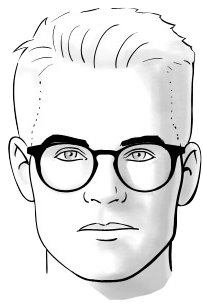
Square Face

Round Face

Triangular Face
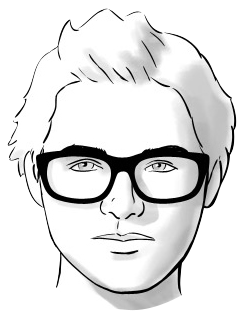
Oval Face
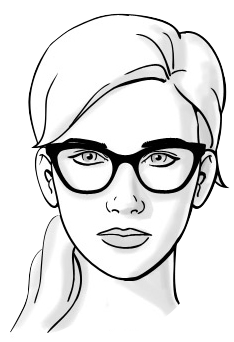
Heart Shaped Face
If you’re looking for assistance to obtain a classically good-looking pair of frames for your face shape, you need to contact us at Ilanga Eyewear for professional guidance and measurements.
Book An Eye Test Now.
Our Friendly Staff Are Ready To Assist You!
Email Us
info@ilangaeyewear.co.za
Office
Shop LG 15 (Next to ABSA ATM)
I’langa Mall
Nelspruit/ Mbombela
1201
Call Us
(013) 742 2302
Emergency
(+27) 078 456 1623